
FolderDesa brings together practical knowledge on farming, village-owned enterprises, culinary traditions, rural tourism, and small-business ideas — all rooted in the everyday life of Indonesian villages.
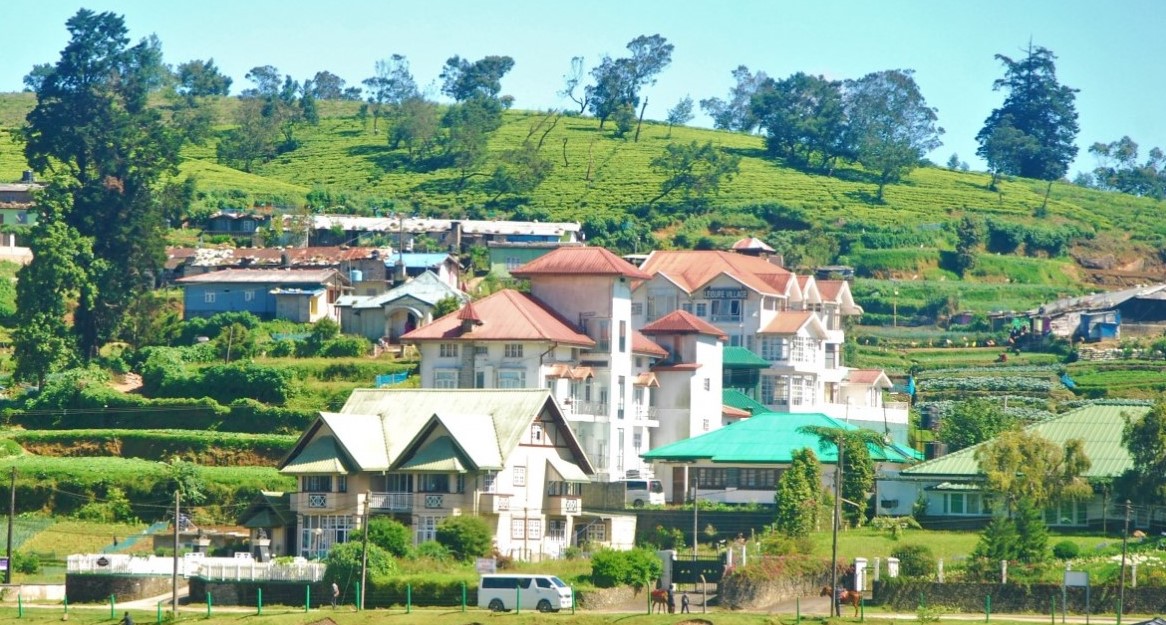
"From taro cultivation in Bogor to village tourism in Banyumas, every village has a story worth telling — and an opportunity worth sharing."
Seven areas of village knowledge
FolderDesa organizes its articles across these interconnected topics, each one grounded in real Indonesian village experience.
What you'll find on FolderDesa
Practical articles written by contributors who understand village life.
Agriculture & Cultivation
Articles on taro (talas bogor), dragon fruit, crystal guava, durian, oyster mushrooms, and tabulampot grapes — plus livestock such as dairy goats and Merino sheep.
Village-Owned Enterprises
Guides on establishing BUMDes, the differences from cooperatives, and why professional phased management matters for village economic growth.
Village Tourism
Coverage of destinations like Desa Karangkemiri in Banyumas, where outbound activities and a swimming pool helped tourism contribute Rp 50 million to village income in 2021.
Culinary Traditions
Indonesian village foods, Sundanese heritage dishes, spiced drinks, infused waters, seafood street-food ideas, and home-industry snack production.
Business Opportunities
From dried wood ear mushrooms and kopyor coconut seedlings to ecoprint crafting, bamboo crafts, and mina padi integrated rice-fish farming.
Village News & Community
Reports on social assistance programs like PKH, village governance structures, and practical tips such as safe homecoming travel during mudik season.
Planning a Village Solar Street Lighting Installation for Rural Communities
Solar-powered street lighting is changing how remote settlements handle public safety, evening commerce, and energy independence. Across the Indonesian archipelago, village governments and BUMDes weigh capital costs against long-term reliability, while observers in places like Alice Springs, Broome, and Cairns draw on similar lessons from Australia's off-grid outback communities. The high solar irradiation enjoyed across northern Australia closely mirrors equatorial conditions in Sumatra, Kalimantan, and Sulawesi, making shared knowledge transfer increasingly relevant.
A successful installation begins long before the first pole is erected. It starts with a clear inventory of which roads, intersections, markets, and gathering points need illumination, how many hours each night the lights must operate, and what level of brightness is appropriate. Australian local councils in regional centres such as Dubbo and Mount Gambier publish lighting guidelines that Indonesian planners can adapt for tropical humidity, monsoon seasons, and battery sizing.
Reading the sun and mapping the village
A lighting master plan starts with a solar resource study that records peak sun hours, monsoon cloud cover, and seasonal variation. The same method used in remote Western Australia to size off-grid homesteads applies directly to Indonesian villages: identify shading from coconut palms, bamboo clusters, and rooftops, then calculate the worst-case autonomy window during the rainy season. Even marginal shading losses of 15-20 percent can shorten battery autonomy by an entire night.
The next step is a village layout audit. Walk every proposed pole location with a village leader, mark pedestrian crossings near schools and mosques, and flag areas where informal vendors set up after dusk. In Australian practice, regional councils often commission similar audits before LED retrofits, storing the field data in a simple GIS layer that becomes a living document for future maintenance teams.
Hardware choices that withstand tropical conditions
Not every solar street lamp sold online suits a humid coastal village or a highland valley with cooler nights. Monocrystalline panels outperform polycrystalline modules in low-light wet-season conditions, while lithium iron phosphate batteries now dominate new installations because they tolerate deep discharge cycles and the heat inside an enclosed pole cabinet. Australian procurement officers working under AS/NZS 5033 standards typically specify IP66-rated luminaires and stainless-steel mounting hardware, and similar specifications protect against corrosion in coastal kampongs.
Luminaire output matters as much as panel size. A 30-watt LED fitting with 5,000 lumens is usually enough for a 4-metre pole covering a 6-metre road, while busier market squares may need a 60-watt fitting with motion-sensing dimming. Smart controllers that step the light down to 30 percent output when no movement is detected can stretch a single battery charge across three overcast nights, useful for highland villages in Papua or Toraja where fog regularly reduces daily solar yield.
Community governance and long-term ownership
Technology is only half the story; village ownership of the asset decides whether the system survives five years or twenty. In Australia, Indigenous ranger programmes in the Kimberley run their own maintenance rotations, and Indonesian villages can borrow this model by assigning a small team of trained technicians paid through the BUMDes budget. Village regulations should clearly state who replaces a battery, who cleans the panels after a dust storm, and how the community reports faults.
For newcomers organising their first renewable project, a practical planning handbook such as the kyanpensaitono-shii-fanggaido-chu-xin-zhe-xiangke guide walks readers through the early decisions that determine project success. Linking the lighting plan to existing village programmes also strengthens accountability and helps frame the lighting system as a productive asset rather than a grant-dependent gift.
Budget, funding and lifecycle economics
A single integrated solar street light with pole, battery, panel, and LED head typically costs between AUD 800 and AUD 1,800 landed in Indonesia, depending on shipping and customs. Multiplying across a village of forty lights yields a capital outlay that most Dana Desa allocations cannot cover alone, so planners usually combine village funds, provincial grants, and corporate social responsibility contributions. The Clean Energy Regulator in Australia administers the Small-scale Renewable Energy Scheme, and although it does not directly fund Indonesian projects, the same certificate-based model has inspired community energy cooperatives in Southeast Asia.
Lifecycle cost matters more than sticker price. A lithium battery rated for 2,000 cycles at 80 percent depth of discharge will outlast a cheaper lead-acid unit several times over, lowering the annualised cost per lumen-hour. Australian off-grid homeowners in Esperance and Whyalla routinely calculate twenty-year levelised costs against diesel generator alternatives, and the same spreadsheet works well for a village treasurer. For villages looking to turn the lighting network into a small revenue stream through tariff collection or advertising boards, the steps laid out in preparing a village enterprise provide a useful operational blueprint.
Installation, commissioning and ongoing care
Installation crews should mount poles on concrete footings that extend below the local termite line, with cable runs protected inside galvanised conduit. Australian sparkies trained to AS/NZS 3000 wiring rules often volunteer for regional projects in Indonesia, and their familiarity with surge protection and residual-current devices translates well to village mains isolation even in fully off-grid systems. After commissioning, a night-time walk-through with village leaders confirms light levels, beam angles, and dark spots that may need additional fill-in fittings.
Maintenance is the quiet factor that decides whether lights stay on for a decade. Panels need cleaning every three to four months, especially during the dry season when dust and volcanic ash accumulate, and a rainwater-fed wash system makes this routine far easier. Integrating the cleaning routine with a rainwater harvesting setup ensures that crews have soft, mineral-free water on hand without hauling buckets from a distant well.
Comparing common solar street lighting options
| System type | Panel wattage | Battery capacity | LED output | Approx. lifespan | Best suited for |
|---|---|---|---|---|---|
| Entry-level all-in-one | 30 W | 20 Ah lithium | 3,000 lm | 8-10 years | Residential lanes |
| Mid-range integrated | 50 W | 40 Ah LiFePO4 | 5,000 lm | 10-12 years | Village roads, market squares |
| Split-system high-power | 80 W | 80 Ah LiFePO4 | 9,000 lm | 12-15 years | Bus terminals, main village square |
| Smart motion-sensing | 40 W | 30 Ah lithium | 4,500 lm (boost mode) | 10-12 years | Remote paths, pedestrian zones |
| Solar + hybrid backup | 60 W | 60 Ah LiFePO4 | 7,000 lm | 12-15 years | Coastal or foggy highland villages |
Practical recommendations before breaking ground
- Commission a solar resource audit before signing any purchase order, even if a supplier offers a standard package.
- Choose LiFePO4 batteries and monocrystalline panels for coastal, humid, or highland sites.
- Adopt Australian or international standards (AS/NZS 5033, IEC 62560) for surge protection and luminaire quality.
- Train at least two village technicians per cluster of thirty lights and budget for their annual stipend.
- Bundle the lighting plan with a rainwater harvesting system to simplify panel cleaning.
- Use a smart controller with motion dimming to extend autonomy during cloudy weeks.
- Open a dedicated bank account inside the BUMDes ledger so that battery replacement funds accumulate over time.
When the last pole is switched on and a village street glows steadily through a wet-season night, the value of careful planning becomes tangible. Treat each light as a long-lived public asset rather than a one-off purchase, and the village gains safer roads, longer trading hours, and a working model of community-owned renewable infrastructure.

Questions or story ideas from your village?
FolderDesa welcomes readers who want to share village experiences or learn more about the topics covered on the site.
Visit the Contact Page