
FolderDesa brings together practical knowledge on farming, village-owned enterprises, culinary traditions, rural tourism, and small-business ideas — all rooted in the everyday life of Indonesian villages.
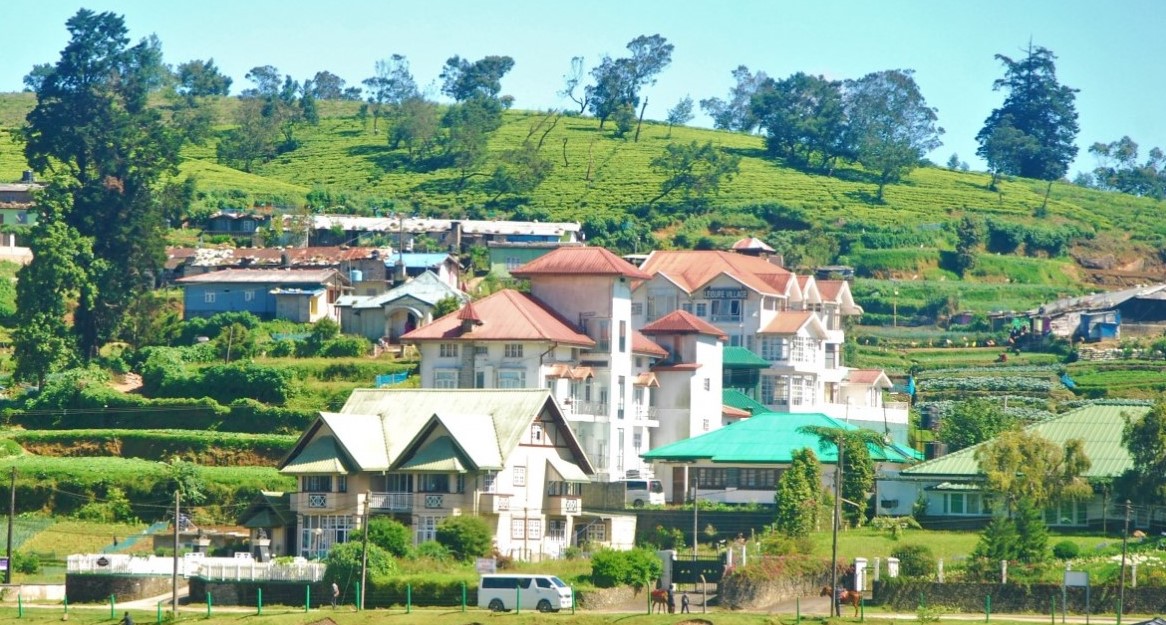
"From taro cultivation in Bogor to village tourism in Banyumas, every village has a story worth telling — and an opportunity worth sharing."
Seven areas of village knowledge
FolderDesa organizes its articles across these interconnected topics, each one grounded in real Indonesian village experience.
What you'll find on FolderDesa
Practical articles written by contributors who understand village life.
Agriculture & Cultivation
Articles on taro (talas bogor), dragon fruit, crystal guava, durian, oyster mushrooms, and tabulampot grapes — plus livestock such as dairy goats and Merino sheep.
Village-Owned Enterprises
Guides on establishing BUMDes, the differences from cooperatives, and why professional phased management matters for village economic growth.
Village Tourism
Coverage of destinations like Desa Karangkemiri in Banyumas, where outbound activities and a swimming pool helped tourism contribute Rp 50 million to village income in 2021.
Culinary Traditions
Indonesian village foods, Sundanese heritage dishes, spiced drinks, infused waters, seafood street-food ideas, and home-industry snack production.
Business Opportunities
From dried wood ear mushrooms and kopyor coconut seedlings to ecoprint crafting, bamboo crafts, and mina padi integrated rice-fish farming.
Village News & Community
Reports on social assistance programs like PKH, village governance structures, and practical tips such as safe homecoming travel during mudik season.
Bringing free Wi-Fi hotspots to Indonesian villages
Across thousands of Indonesian villages, mobile data reaches where roads often do not, yet a stable, shared connection at the village hall, school, or market remains rare. As more residents rely on the internet for farming prices, school assignments, and small-business promotion, the case for a free communal hotspot grows each year. The model rests on a simple idea: one reliable uplink, distributed fairly, among dozens or hundreds of users.
For Australian readers, the parallels are familiar. The National Broadband Network rollout in remote New South Wales and Western Queensland has wrestled with the same cost-per-user problem, and the Regional Connectivity Program has funded shared hotspots in places like Cape York and the Kimberley. Indonesian villages can draw on those lessons, adapted for the archipelago. What follows is a practical guide to building a village-scale free Wi-Fi hotspot, from the first planning meeting to daily operation.
Why a village needs its own hotspot
A shared hotspot is more than a convenience. Where households cannot afford home broadband, a single community link unlocks access to agricultural market data on platforms like Pantau Harga, online banking for BUMDes transactions, and distance-learning tools. Health workers can submit reports and consult specialists through telemedicine apps without travelling to the city.
Indonesia's geography complicates this. Many villages sit in valleys, on coastal strips, or behind forested ridges where the nearest fibre or strong 4G signal is kilometres away. The scale resembles remote Australia: a cattle station west of Bourke or a First Nations community in the Northern Territory often relies on a single shared uplink, and the maintenance headaches look surprisingly familiar. A village hotspot, designed with realistic expectations, can bridge that gap without waiting for national infrastructure to arrive.
Planning the network before buying anything
Before routers and antennas are ordered, the village team should map who will use the connection, where, and for what. A short household survey, a chat with the village head, and a meeting with teachers and small-business owners will reveal whether demand peaks in the evening, around lunchtime, or during harvest season when prices are checked hourly.
Coverage planning matters just as much. Walking the proposed area with a smartphone and a signal-strength app helps identify where the uplink is strongest. Outdoor spaces such as the balai desa, the village market, and the local school are usually the priority zones. Drawing a simple map with estimated distances keeps antenna placement honest. The small-scale hotspot setup guide walks through a similar mapping exercise with printable checklists.
Survey and mapping essentials:
- Estimate peak-user numbers and the type of activity expected
- Identify at least two priority coverage zones within 200 metres
- Confirm a stable power source or budget for solar backup
- Record the existing mobile signal strength in each zone
Choosing hardware that actually lasts
Equipment should match climate, not catalogue promises. Indoor routers and access points fail quickly in tropical humidity, salty coastal air, or the dust of dry-season farming villages. Industrial-grade outdoor units, even older models, almost always outlast consumer gear. Australian installers working on remote Pilbara sites spec similarly toughened equipment, and a village hotspot needs weatherproofed enclosures and surge protection.
Antenna selection depends on distance from the signal source. A directional antenna aimed at the nearest tower outperforms a generic stick antenna, especially when the village sits in a fold of hills. For distribution, two or three access points wired to a central switch work better than a single high-power unit, because lower transmit power keeps devices within spectrum limits. Savings from cheaper gear usually turn into repair costs within the first monsoon.
Selecting the internet backhaul
The uplink defines everything else. Where fibre or fixed wireless has reached the village, that is the first choice. More commonly, the connection comes from a 4G or 5G signal shared with a cellular tower. Choosing the right provider matters because Indonesian carriers offer different data packages and rural coverage maps, and reading how Telstra and Optus structure remote plans in Australia is a useful proxy for the fine print here.
Satellite is no longer a last resort. New low-earth-orbit services have brought latency down enough to support video calls, changing how rural clinics and schools plan their connections. Cost remains the catch, so any satellite plan should be compared with a local mobile package. Whichever route is chosen, the contract should allow data top-ups during peak seasons rather than capping usage.
Power, funding, and long-term sustainability
A hotspot that goes dark during a blackout serves no one. Mains electricity in many villages is unreliable, and a router drawing under twenty watts is easy to back up. A battery bank sized for four to six hours, paired with a small solar panel, keeps the network alive through evening outages and reduces diesel costs. Australian off-grid homesteads use very similar setups, often from the same suppliers.
Funding usually comes from a blend of sources, and transparency matters as much as the money itself. A simple monthly report showing uptime, data used, and expenditure builds trust and keeps the project out of village politics.
Funding sources to consider:
- Village funds (APBDes) earmarked for digital infrastructure
- Contributions from local BUMDes or cooperatives that benefit commercially
- Partnerships with universities, NGOs, or corporate CSR programmes
- Small monthly contributions from heavy users such as warung owners
Legal steps and community rules
Indonesia regulates wireless networks through Kominfo, and any network broadcasting an SSID must comply with local licensing rules. Using licensed spectrum, registering the network where required, and avoiding equipment that transmits outside approved frequencies keeps the village on the right side of the law. The framework is less onerous than Australia's ACMA apparatus, but the principle is the same: documented, lawful operation protects everyone.
Equally important is a written usage policy. It should set hours of operation, prohibit illegal downloads, and explain what data is logged. Posting it at the access point, in Bahasa Indonesia, with a friendly tone reduces arguments. A nominated local technician, paid a small stipend from the village fund, becomes the point of contact for repairs, complaints, and user questions.
Running the hotspot day to day
Once the network is live, attention shifts to maintenance. Firmware updates, password rotation, and antenna cleaning should run on a schedule. A shared logbook, paper or digital, captures issues so the next volunteer picks up smoothly.
Community engagement keeps the hotspot relevant. Periodic training at the village hall, posters promoting online safety, and an open invitation for feedback help the network evolve. The most successful village hotspots in Indonesia are rarely the most expensive; they are the ones where residents treat the connection as a shared asset, like a water pump or rice-drying field. To begin, gather the kepala desa, two BUMDes representatives, and a local teacher next week, and start by mapping who will use the network and what they need from it.

Questions or story ideas from your village?
FolderDesa welcomes readers who want to share village experiences or learn more about the topics covered on the site.
Visit the Contact Page